How Can Vegans Enjoy Korean Food Safely? A Friendly Guide from Uncle Hoc
Hi friends 🙋♂️
I’m Uncle Hoc (혹 아저씨) from the HireVisa team.

Today, for the very first time, Uncle Hoc brought a topic just for vegan & vegetarian friends who want to enjoy Korean food 🌱
0. “Korean food looks amazing… but I’m vegan and a bit scared” 😅
When I talk with international students, this is the sentence I hear most often from vegan / vegetarian friends:
“Korean food looks so delicious…
but I’m scared it might have anchovy broth, jeotgal(젓갈), or meat inside…”
I completely understand this feeling.
On the surface, many Korean dishes look like vegetable dishes, but in reality there’s often:
- anchovy broth 🐟
- shrimp 🦐 jeot (salted shrimp, 새우젓) or fish sauce-style jeotgal(젓갈)
- soups made from beef or sagol (beef bone broth, 사골)
quietly hiding in the sauce or broth.
So the goal of this article is very simple 👇
✅ Show you how to keep as much “authentic Korean flavor” as possible
✅ While still choosing menus that vegans/vegetarians can safely try
✅ And give you simple Korean phrases you can actually use in restaurants
If this post can help vegan friends in Korea think:
“Okay, I can eat well and live well here too.”
then my mission is a success 😊
This guide will be especially helpful if you are:
-
🐟 Vegan/vegetarian who wants to avoid meat, fish, seafood + their broths (anchovy, sagol, seafood base) and jeotgal
-
🥚 Someone who is okay asking to remove eggs/dairy by saying “빼주세요” (“Please leave it out.”)
-
This includes strict vegans too — I’ll keep pointing out:
“Here, you should ask them to remove egg / dairy to make it safer.”
-
-
🍚 Someone who wants to experience “real Korean local food,” but is worried about hidden animal ingredients
So when we look at each menu, I’ll always ask with you:
“How vegan-/veg-friendly is this?”
“What should I ask them to leave out to make it safer?”
We’ll go through it step by step, together 😉
I. Korean Dishes to Try First 🌈
(Customizing strategy + naturally vegan-friendly bases)
- 비빔밥 (Bibimbap) – Vegan-friendly base & the icon of Korean food 🥗
(If you click the dish name above, you can listen to how it’s pronounced in Korean.)
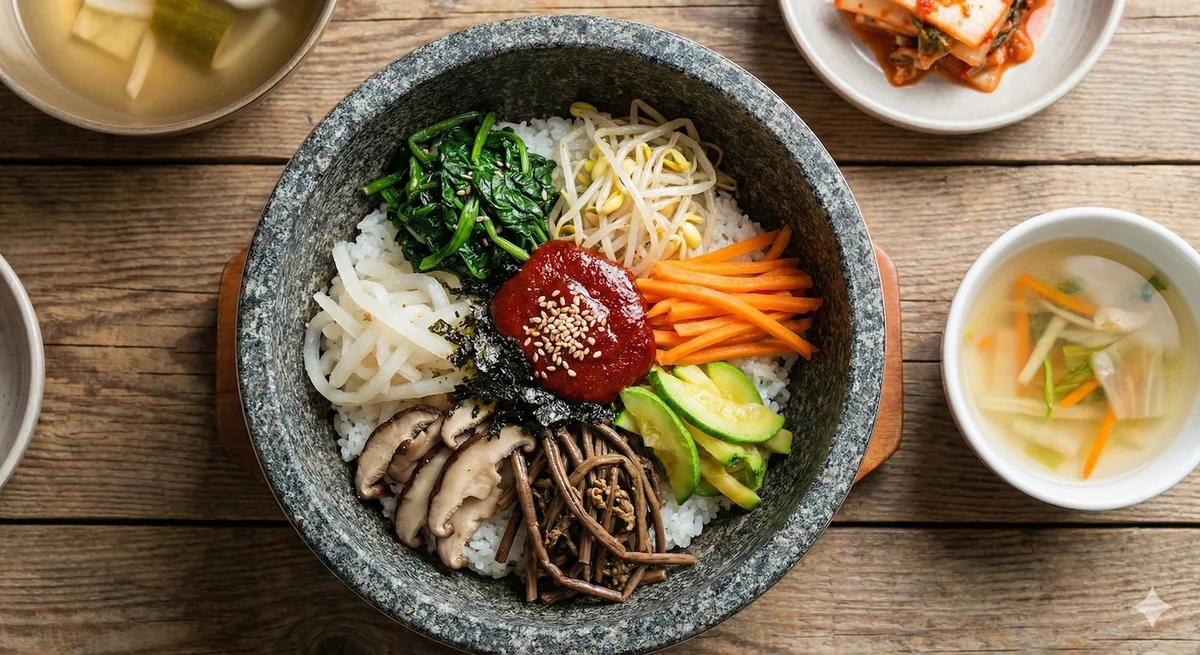
Bibimbap literally means “mixed rice” with various vegetables + rice in one bowl.
You’ll often see:
- spinach,
- gosari (fernbrake),
- bean sprouts,
- zucchini,
- carrot, etc.
on top of rice, with red pepper paste (고추장) and sesame oil mixed in.
The basic structure is already very vegetable- and namul-based,
so it’s a super vegan-friendly menu 💚
But in a typical bibimbap, you’ll often see:
- stir-fried beef
- a fried egg (or sometimes raw egg yolk)
So when you order, it’s good to say:
- “고기 빼주세요.” – “Please leave out the meat.”
- “계란도 빼주세요.” – “Please also leave out the egg.” (if you’re vegan)
If possible, you can add one more sentence:
-
(“Could you add a bit more mushrooms or vegetables?”)
If you do this, bibimbap becomes almost like a green salad + rice in a bowl —
one of the most perfect “first Korean vegan dishes” to try.
2. 야채 김밥 (Vegetable Gimbap) – A simple but powerful one-meal option 🍱
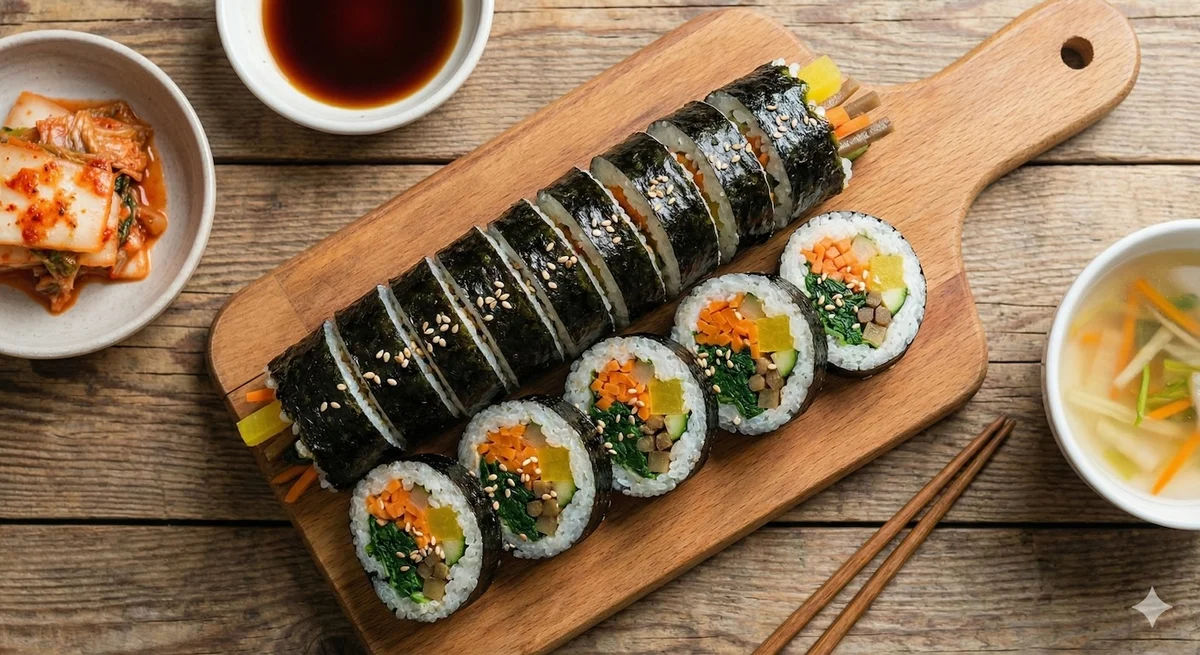
Gimbap is something Koreans eat all the time.
In a standard gimbap roll, you’ll often find:
- ham,
- mat-sal (imitation crab; fish-based),
- egg omelet,
so it’s a bit risky for vegans if you order it “as is.”
But if you remove those three, and keep only:
- cucumber,
- carrot,
- spinach,
- pickled radish (단무지),
- burdock root, lettuce, etc.,
you still get a very tasty vegetable-only gimbap 🥒🥕
When ordering, you can say:
-
(“Could you make it as a vegetable gimbap?”)
-
(“Please leave out the ham, imitation crab, and egg.”)
Most gimbap shop owners, if you say it like this, will immediately think:
“Ah, this customer is vegetarian,”
and will try to help you.
3. 잡채 (Japchae) – A party dish that works well as a veg option too 🍜
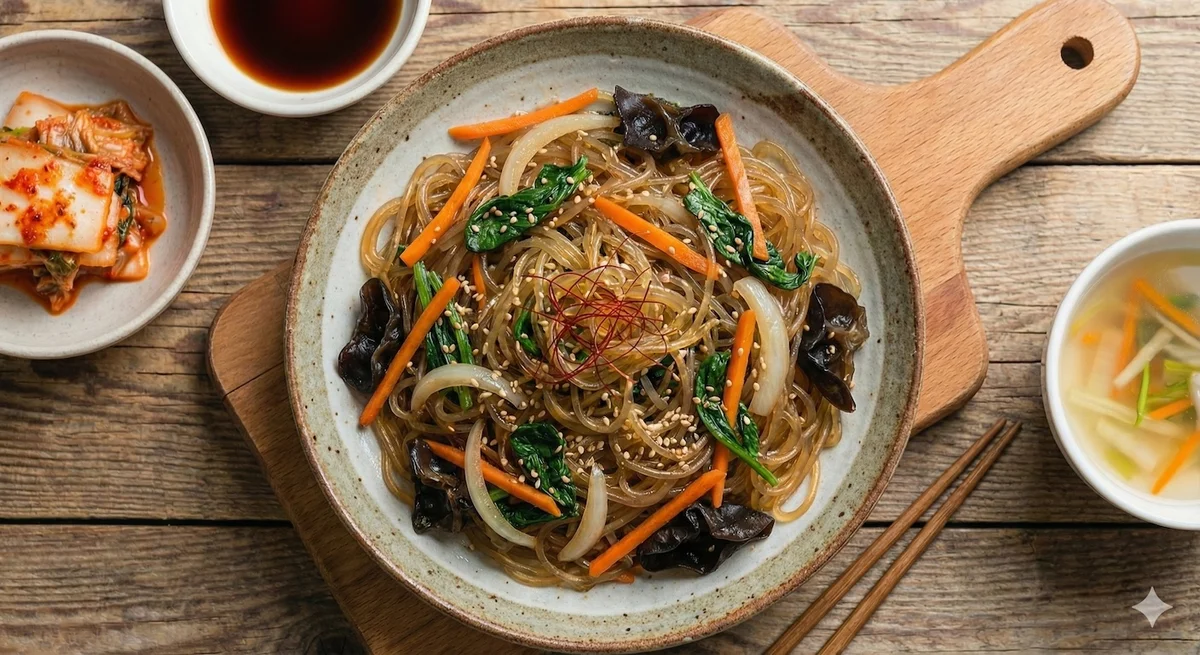
Japchae is made from:
- glass noodles (sweet potato vermicelli),
- vegetables like onion, carrot, spinach, mushrooms,
- and soy sauce-based seasoning.
It’s a classic party/holiday dish in Korea.
The original structure is already very vegetable-heavy,
so if you remove the meat, it becomes a very good vegetarian dish.
Some places do add a bit of stir-fried beef.
So when you order or ask, it’s good to say:
-
(“Does the japchae have meat in it?”)
-
(“Is it possible to make it without meat?”)
Just asking these once already makes things much safer 👍
4. Tofu dishes & stews – Using Korea’s love for tofu 🧈 (but actually tofu)
Korea eats a lot of tofu,
so there are quite a few tofu-based options suitable for vegetarians.
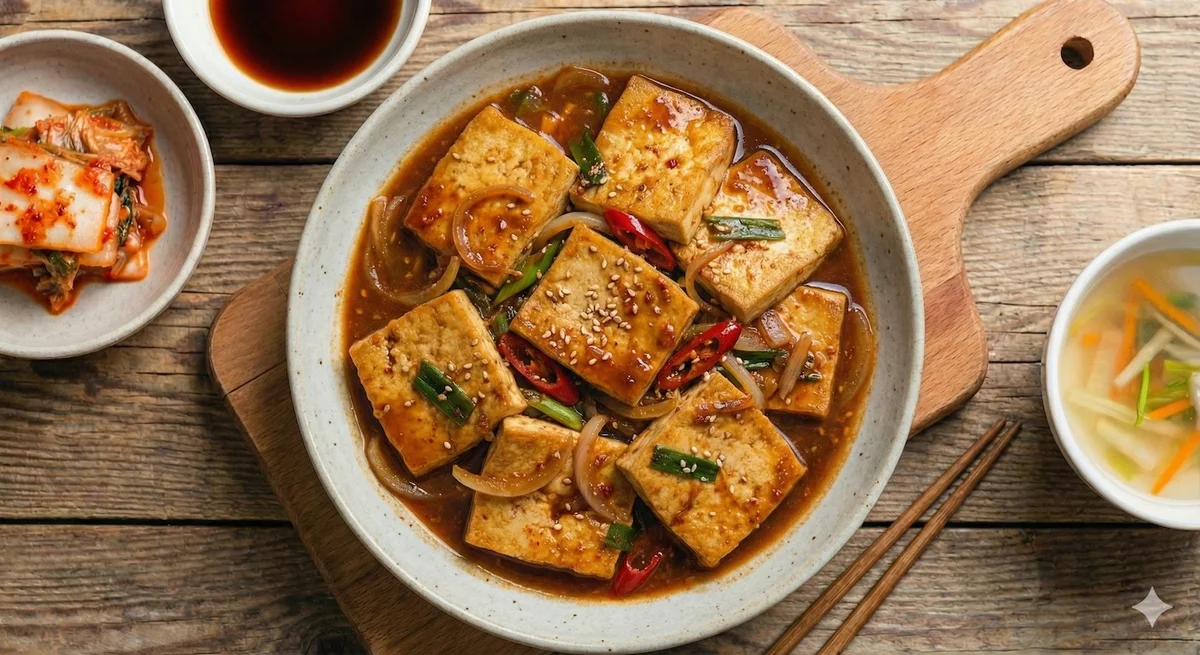
두부조림
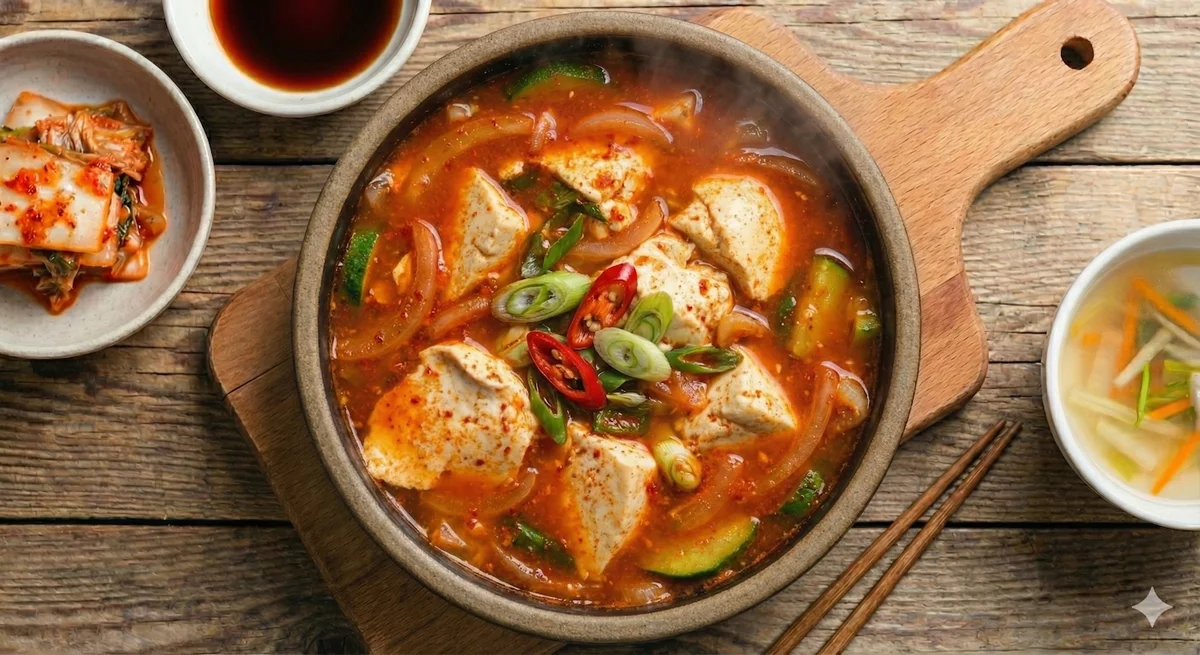
순두부찌개
Good tofu-centered menus to look for
- 두부조림 – braised tofu
- Tofu simmered in a soy sauce-based marinade.
- Works well even without any meat, and is great with rice.
- 순두부찌개* (soft tofu stew, veggie-broth version)
- Normally, many places make it with seafood or meat and anchovy/seafood broth.
- But some restaurants, if you ask, can make it with vegetable broth instead.
- Sometimes they crack a raw egg into it at the table — so if you avoid eggs, make sure to check that too.
If you want to try a stew, these two sentences are key:
-
(“Please leave out the meat, seafood, and egg.”)
-
(“Would it be possible to make the broth with vegetables?”)
These two lines are your core tofu/stew survival tools 🌿
5. Noodle options – a solid bowl if conditions are right 🍜
5-1. 잔치국수 (Janchi-guksu) – Warm and light noodles
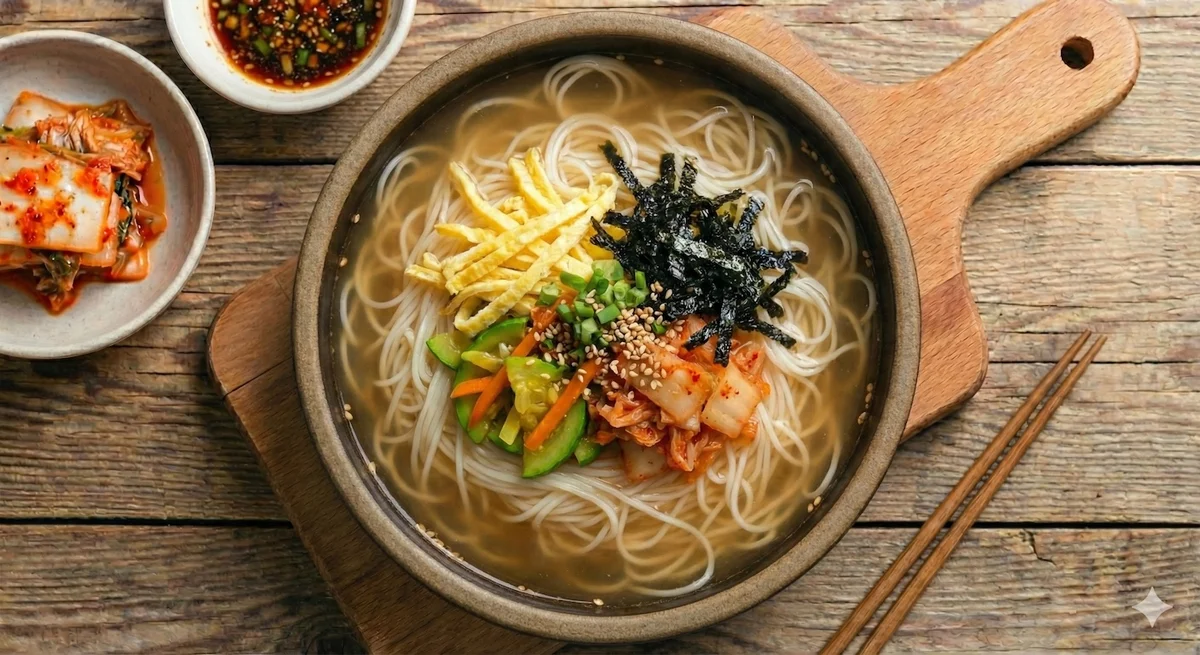
Janchi-guksu is a simple warm noodle dish:
thin wheat noodles in a clear broth.
The problem is: that broth is often made with anchovies.
So from a vegan perspective, you really need to ask 👉
-
(“Is the broth vegetable-based, or is it anchovy broth?”)
If it’s veggie broth, it can be a warm and gentle vegetarian option.
If it’s anchovy broth, strict vegans should skip it.
5-2. 들기름 막국수 – A nutty, simple bowl focused on flavor 🥢
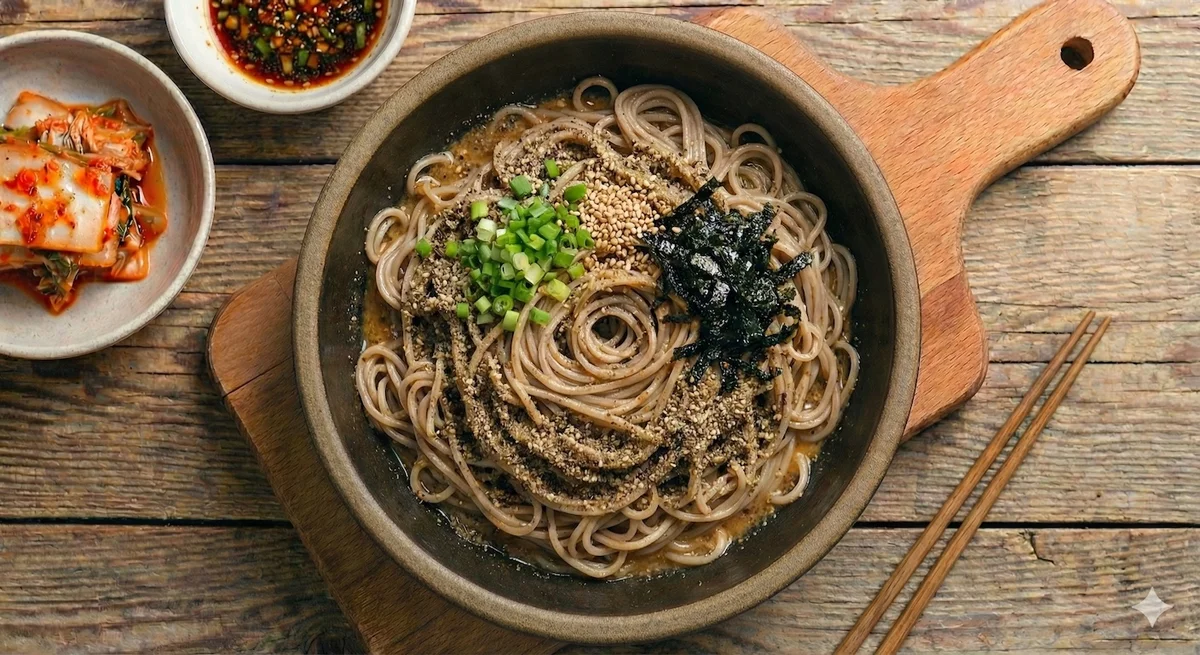
Deulgireum makguksu is usually:
- buckwheat noodles (메밀면),
- perilla oil (들기름),
- a simple soy-sauce type seasoning,
- topped with seaweed flakes and some vegetables.
Because it doesn’t use spicy gochujang sauce or seafood broth,
it’s relatively easy to make it veg-friendly.
However, some places might use fish-based soy sauce (어간장) in the seasoning.
If you’re strict, you can ask:
-
(“Does the sauce contain any seafood?”)
5-3. 콩국수 (Kong-guksu) – The summer vegan protein champion 🥛🍜
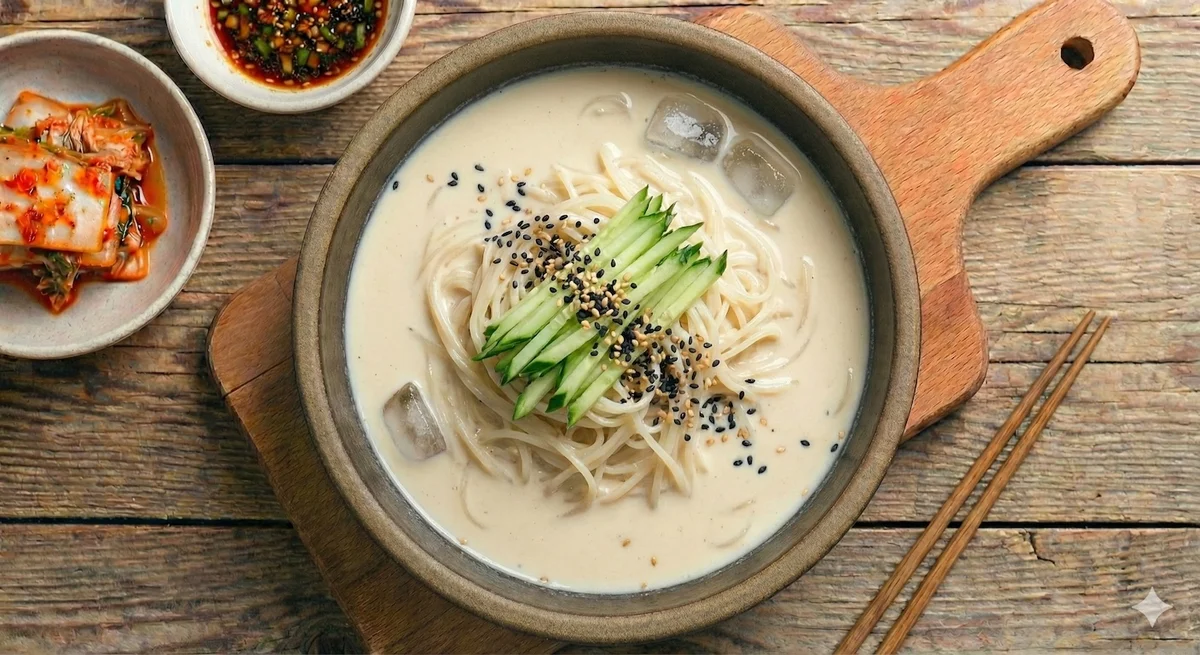
Kong-guksu is usually a summer-only dish,
but it’s one of the top recommendations for vegans in Korea.
It’s made from:
- a rich, cold soy milk-like broth (ground soybeans + water),
- thin wheat noodles,
- with toppings like cucumber, sesame seeds, and either salt or sugar (depending on your taste).
Basically, it’s just soybeans + water + salt (or sugar),
so from a vegan standpoint it’s usually very safe.
If you’re in Korea during summer,
I really recommend trying kong-guksu at least once as your “one-bowl vegan protein meal.” 😋
II. The backbone of Korean meals: Namul side dishes & Jeon (pancakes) 🥬🥞
1. 나물 반찬 (Namul side dishes) – The hidden heroes on the table
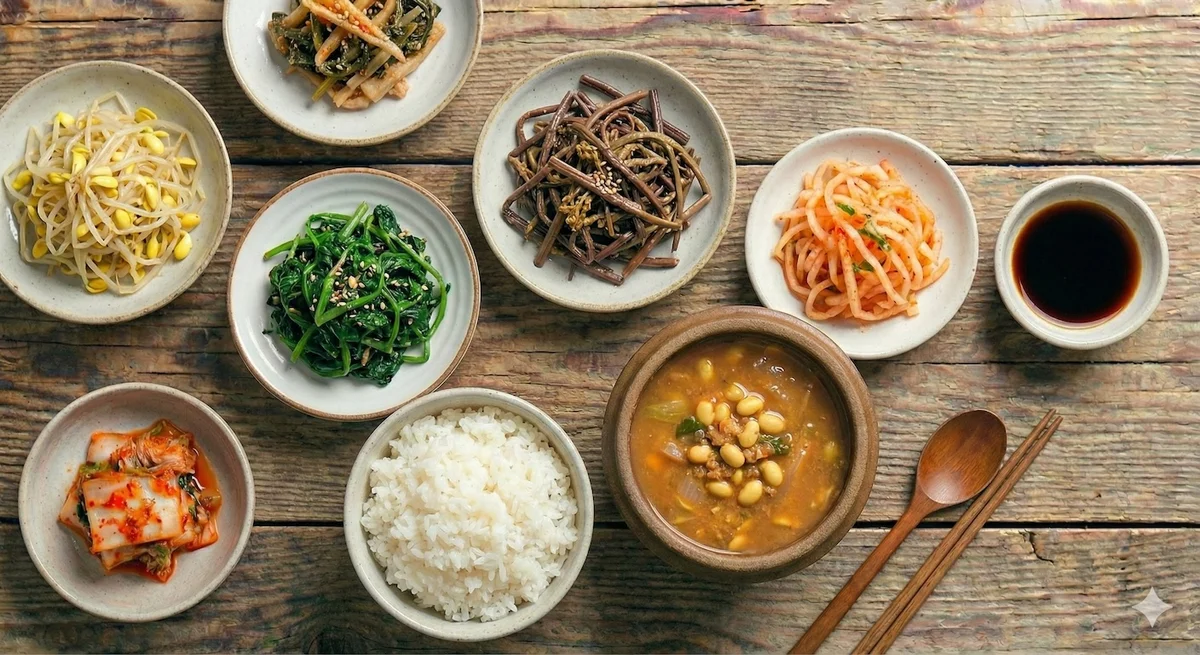
When you order a meal at a Korean restaurant,
you’ll see several small side dishes (반찬) come out automatically.
Among them, you’ll often find:
- seasoned spinach,
- seasoned bean sprouts,
- braised potatoes in soy sauce,
- braised black beans,
and more — many are vegetable or bean-based,
which is quite nice from a vegetarian point of view.
However, for strict vegans, there are a few things to be careful about:
- Some soy-sauce seasonings may use anchovy broth.
- Some namul dishes may use fish-based soy sauce (어간장).
And for kimchi, most standard kimchi in Korea contains jeotgal (fermented seafood like salted shrimp or fish sauce).
So if you’re vegan, it’s good to ask:
-
(“Does this side dish contain seafood or anchovy broth?”)
-
(“Is this vegan kimchi? Does it have jeotgal (fermented seafood) in it?”)
Even if you don’t ask every time,
just being aware of this already helps a lot.
2. Jeon (Korean pancakes) – The food Koreans crave on rainy days ☔️
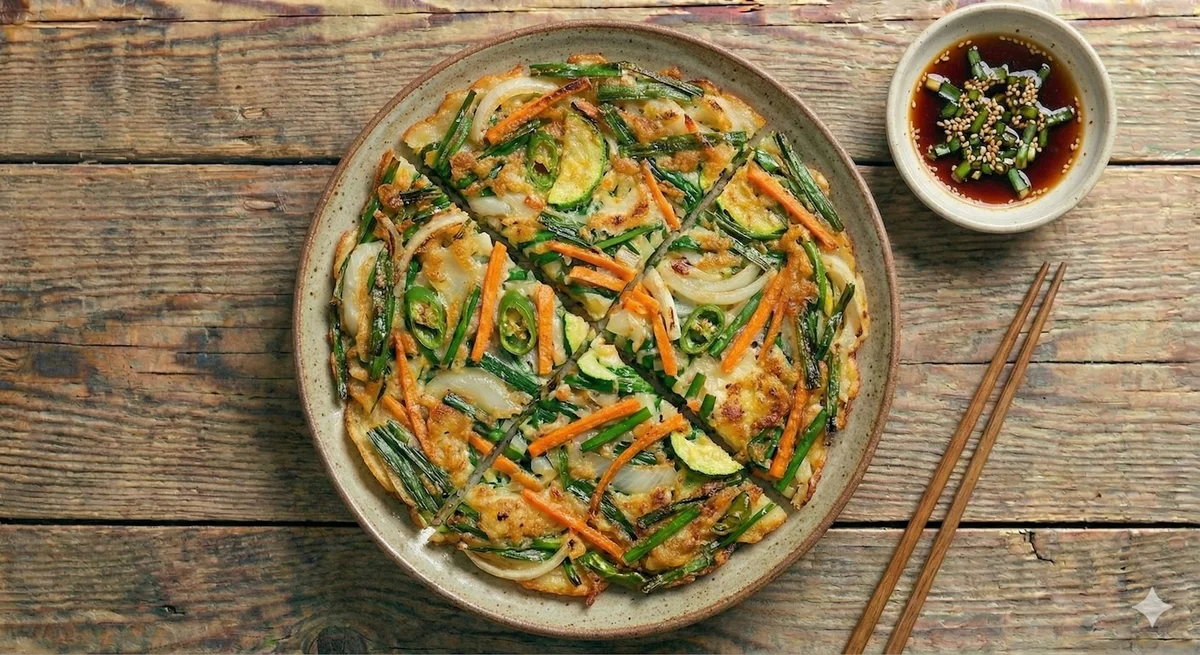
야채전
Jeon is a Korean-style savory pancake, pan-fried in oil.
For vegans/vegetarians, relatively safer options include:
- 야채전 – vegetable jeon
- made only with vegetables, no meat/seafood.
- 김치전 (kimchi jeon, if made with vegan kimchi)
- if it uses kimchi without jeotgal, it can be a good vegan option.
Things to be careful about:
-
해물파전, 해물전 (seafood pancakes) →
if “해물 (seafood)” is in the name, it’s almost always a no-go for vegans ⚠️
-
For kimchi jeon, remember standard kimchi is usually made with jeotgal, so:
-
(“For this kimchi jeon, is the kimchi made with jeotgal?”)
-
III. The ultimate option: 사찰음식 (Temple food) – The highlight of traditional Korean vegan cuisine 🛕🍃
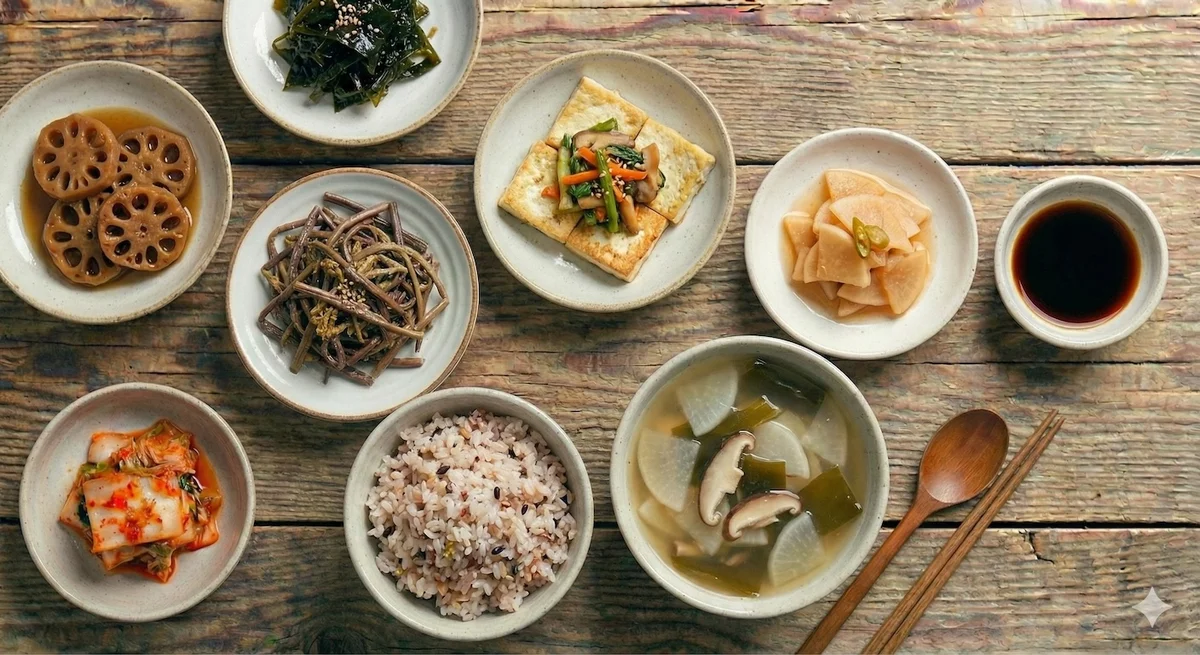
Now let’s go into the deeper side of Korean vegan food culture.
Temple food (사찰음식) originates from meals eaten by Buddhist monks.
Its features are very clear:
- No meat, fish, or seafood ❌
- No eggs or dairy ❌
- No anchovy, shrimp jeot, fish sauce, etc. ❌
- No strong “five pungent vegetables” (오신채) like garlic, green onion, leeks, etc. ❌
So even by strict vegan standards,
temple food is extremely clean and plant-based.
These days, temple food is recognized as an important part of Korean traditional food culture,
and it has been designated as a National Intangible Cultural Heritage.
So even a single temple-food meal becomes a kind of “Korean cultural experience,” not just eating.
If you’d like a quiet meal where you focus on the taste and texture of vegetables and grains themselves,
I really recommend trying a temple-food restaurant or a restaurant near a temple at least once 🌿
IV. Real-life Korean phrases you can use when ordering 🗣️
Let’s focus less on detailed translations and more on what to actually say in a restaurant.
1️⃣ Introducing yourself
-
(“I’m a vegetarian.”)
-
(“I’m vegan.”)
If you get used to saying just these two,
staff will be much more likely to help you choose suitable dishes.
2️⃣ Asking them to leave things out
- “고기 빼주세요.” – Leave out the meat.
- “해물 빼주세요.” – Leave out the seafood.
- “계란도 빼주세요.” – Please also leave out the egg.
If you get used to adding these after dish names —
for bibimbap, gimbap, japchae, jeon, stews, etc. —
you’ll suddenly find many more menus become possible.
3️⃣ When you want to check the broth
For any dish with soup or broth, this is critical:
-
(“Is the broth made with vegetables?”)
-
(“Does the broth contain anchovy or beef bone?”)
With just one moment of courage to ask this,
you’ll know much more clearly whether you can safely eat the dish.
4️⃣ Words on the menu that should make vegans extra cautious ⚠️
If you see these on a menu, it’s a good idea to ask more questions:
- 멸치 – anchovy; often used in broth and stir-fries
- 젓갈 – fermented seafood (like salted shrimp, fish sauce); used in kimchi and many seasoned sides
- 해물 – seafood in general; shows up in stews, pajeon, soups
- 사골 – beef bone broth; used as a base for soups and some ramen
If you spot these words, think:
“Ah, I should double-check this one.”
Then briefly explain again that you’re vegan/vegetarian, and ask what’s inside.
V. ⚠️ Wait! Kimchi is something vegans should always check 🥬
One of the most confusing foods for vegan/veg friends in Korea is kimchi.
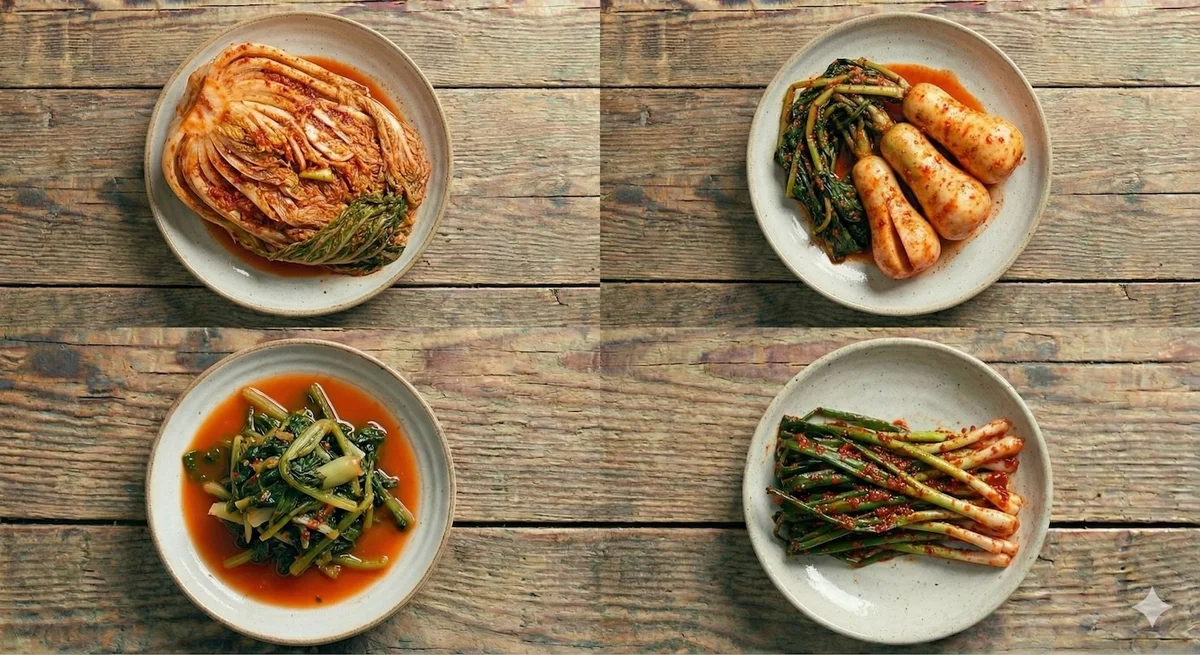
From the outside, it just looks like:
“Cabbage + chili + garlic + green onion”
— basically a vegetable dish.
So it feels like it should be vegan by default.
But in reality, in most Korean restaurants:
- standard kimchi almost always contains jeotgal (젓갈) 🐟
- This includes salted shrimp (새우젓), anchovy fish sauce, sand lance (까나리) fish sauce, etc.
These are commonly used in kimchi seasoning to give a deeper umami flavor.
And remember: kimchi usually:
- comes out automatically as a basic side dish
- in almost every Korean restaurant
So from a vegan perspective, kimchi can easily become:
“I didn’t even order it,
but a non-vegan side dish is already sitting in front of me.” 😅
That’s why there’s one thing Uncle Hoc really wants to say 👇
For kimchi: always, always, always check at least once.
With a bit of courage, ask:
-
(“Does this kimchi have jeotgal (fermented seafood) in it?”)
-
(“Is this vegan kimchi?”) – especially in vegan restaurants / temple-food places.
If the staff say:
- “네, 젓갈 들어가요.” (“Yes, it has jeotgal.”) or
- “잘 모르겠어요.” (“I’m not sure.”)
→ Then it’s safest not to eat it.
If they say:
- “아니요, 젓갈 안 넣었어요.” (“No, we didn’t add jeotgal.”)
→ Then you can enjoy it with much more peace of mind 😊
Wrap-up 🌱
Living as a vegan or vegetarian in Korea is definitely not the easiest thing at first.
But with:
- bibimbap (customized),
- vegetable gimbap,
- japchae without meat,
- tofu dishes,
- namul side dishes,
- vegetable jeon / vegan kimchi jeon (with checking!),
- janchi-guksu (if the broth is veggie),
- deulgireum makguksu,
- kong-guksu in the summer,
- and temple food,
if you can ask a few questions and say a few “빼주세요” sentences,
then it’s absolutely possible to have a delicious and healthy plant-based life in Korea 💚
Uncle Hoc is genuinely cheering for that moment when you think:
“I can eat well and live well in Korea too.”
If, while living in Korea:
- you’ve had a hard time because of being vegan/vegetarian,
- you got stuck when trying to choose a menu,
- or you have a situation where you’d love a guide like this,
you can always email me at
혹아저씨 이메일 📧
I’ll definitely look at your questions when deciding future topics,
and if it’s something simple, I’ll try to reply directly by email too 😊
That’s it for today!
Thank you for reading your first Korean vegan food guide
together with Uncle Hoc 🙋♂️🌿
See you next time, friends 💚